
Hobbs Previous Residents by Era
One address can leave different records in different periods. Parcel data identifies the physical property and its legal trail. The Clerk index points to recorded instruments. Directories and newspaper microfilm add household and community context. These sources do not answer the same question, so the best starting route depends on the date you are trying to establish. A current parcel display is useful for stable identifiers, while a dated directory or an earlier recorded document is more useful for past residents.
| Hobbs source | Time coverage | Where held | What it can show |
|---|---|---|---|
| Assessor LiveWeb and Portico GIS | Current public parcel display | Lea County Assessor and Portico | Parcel code, situs, legal description, owner and recording leads. |
| Clerk scanned grantor/grantee index | 1917-1981 | Lea County Clerk LiveWeb | Historic instrument-index path for names and recordings. |
| HPL city-directory holdings | 1938-41; catalogue beginning 1939 onward; 2013-16 leads | Hobbs Public Library | Dated household, address, and commercial-directory leads. |
| Hobbs Daily News title record | 1936 onward title and microfilm lead | Library of Congress and local microfilm route | Historic newspaper context, not an online obituary index. |
| City building files | No public index located | Hobbs Building Safety or City Legal request | Targeted permit, inspection, or plan records when available. |
For a date in the Clerk's 1917-1981 index span, the recording trail is often the next move after the parcel record. For a household question, test the nearest confirmed library directory issue. If neither route fits, use the newspaper, archive, or a narrow City request. A missing online result should be recorded as absent from that channel, not as proof that the record never existed.
Hobbs Property Keys for Past Residents
[INSIDER TIP] Before asking an office to search an old address, collect the physical or situs address, parcel code, legal description, and a recording lead when one is displayed. Search the address in Lea County Assessor LiveWeb or Portico GIS, then compare the returned property fields. LiveWeb separates physical-address searching from owner, property-code, mailing-ZIP, subdivision, and Township/Range/Section routes. Portico can search by Location, Parcel Code, Owner Number, Owner Name, Subdivisions, or Sections/TRS.
A situs address locates the taxable property. A mailing field identifies where tax correspondence is sent. They are not interchangeable, and neither establishes who lived there at an earlier date. The legal description, subdivision, lot/block text, and parcel code are steadier ways to connect an old address with a recorded plat or deed. Preserve directional prefixes, street suffixes, and unit numbers as searched because an older source may use a different presentation.
That three-part bundle, parcel code plus legal description plus reception number, gives a Clerk or City department a focused way to locate the right file. It also helps avoid forcing a modern street label onto an earlier record.
Hobbs Clerk Index for Past Residents
Lea County Clerk is the custodian for recorded deeds, mortgages, oil-and-gas leases, powers of attorney, marriage records, and probate proceedings. The Clerk's LiveWeb index offers Reception Number, Grantor, Grantee, Book/Page, marriage, probate, and Scanned Index routes. Grantor and Grantee searches take a last-name-first name form, an optional file date, and a document-type selector. The historic grantor/grantee index books covering 1917 through 1981 are scanned and indexed, creating a documented bridge across the county's early recording era.
Use the index as a lead to the instrument, not as a substitute for the document. Results and images depend on the query, and the index changes daily as corrections are made. For an official copy, an original-document question, or a missing historic lead, contact the Clerk at 100 N Main, Suite 1C, Lovington, or call 575-396-8619. The office publishes weekday hours of 8 a.m. to 5 p.m., excluding federal holidays.
The Clerk's office page confirms the recording and historic-index route used for a Hobbs address backtrail.
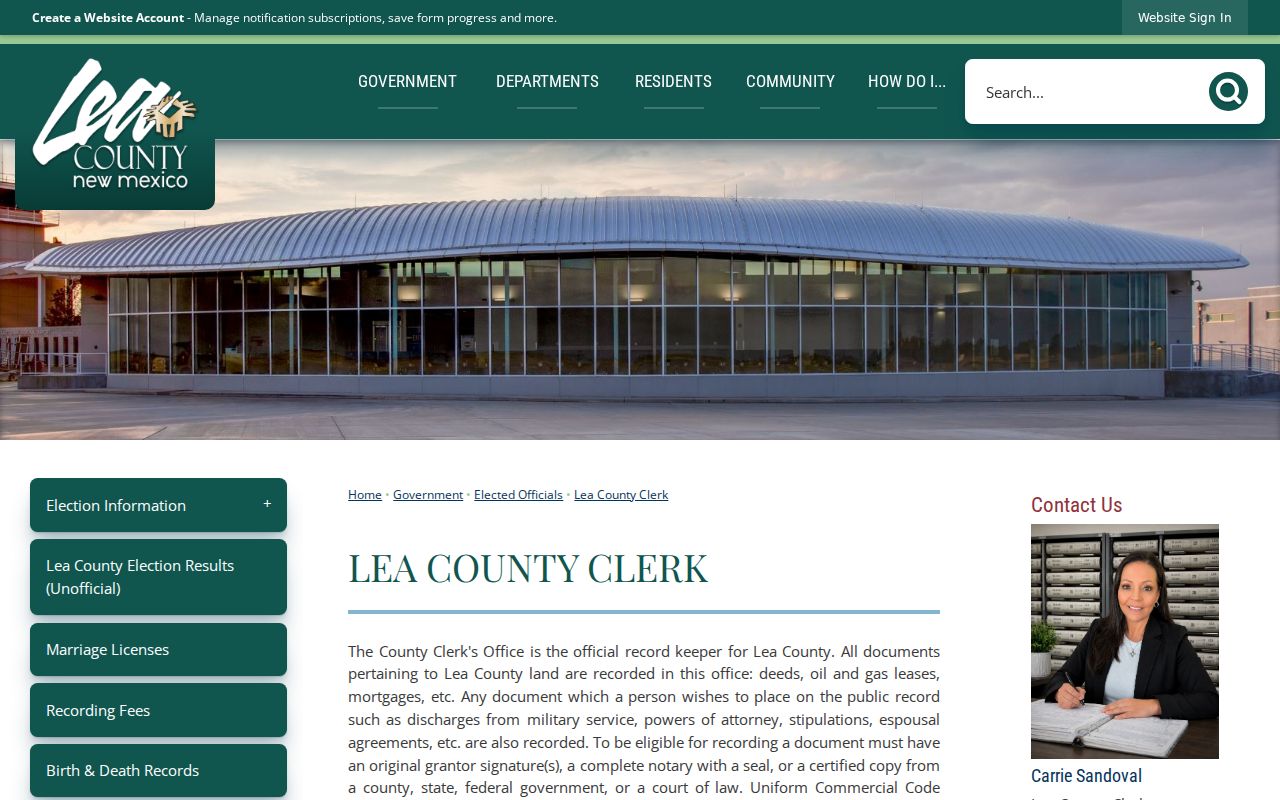
Write down the reception number, document type, recording date, book/page lead, grantor, and grantee before moving backward to the next transaction.
Note: A Clerk index finding identifies a recorded instrument path, while the document itself supplies the details that must be checked.
Hobbs Past-Resident Permit Requests
[MYTH] An old Hobbs address does not have a public citywide permit or address-change index to search. The City page for Building Safety provides permit applications, plan review, inspections, and code-enforcement contact information, but no public name, parcel, or street permit portal was located. City manager reports provide aggregate permit activity, not a property-level search tool.
Ask for a narrow, concrete file: a permit application, issued permit, inspection log, certificate of occupancy, plan-review correspondence, or final status for a specified physical address, legal description, or permit number and date range. Building Safety is at City Hall and can be reached at 575-391-8158. If a written public-records request is needed, City Legal assists with that route. No official citywide index for address changes, street renumbering, or annexation years was located, so do not invent a conversion between an old and current address.
Trace Hobbs Previous Residents Through Deeds
Recorded ownership is not the same as occupancy, but a dated deed chain is a durable framework for an address history. Start with the parcel's current legal identity. Then use the Clerk index to identify the instrument through which the current owner received the property. In a deed, the grantor transfers an interest and the grantee receives it. The earlier owner is usually found by searching the seller named on one transfer as a grantee on a prior one. Keep the document date, reception number, and legal description together at every step.
- Locate the parcel through the Assessor Physical Address route or Portico Location search and record its parcel code, legal description, and displayed recording lead.
- Search the current owner's name in the Clerk's Grantee route, or use a known reception number or book/page, to find the acquisition instrument.
- Record the grantor, grantee, document type, filing date, reception number, and the legal description shown on the actual instrument.
- Search that grantor as a grantee to locate the prior acquisition, narrowing by date and document type when the name is common.
- Repeat the sequence backward, using the scanned 1917-1981 index where it fits and asking the Clerk about earlier or unclear material.
- Grantor
- The person or entity transferring an interest in the recorded instrument.
- Grantee
- The person or entity receiving that interest. This name can lead to the prior purchase record.
- Chain of title
- The sequence of recorded transfers connected by the same legal property identity. It does not prove occupancy.
- Legal description
- The recorded property description, such as subdivision, lot, block, or Township/Range/Section text. It is often more stable than an old street address.
Hobbs Directory Dates for Past Households
Directories add the household layer that deeds may not show. HPL catalogue records provide dated Hobbs leads for 1938-39, 1939-40, 1941, a Polk title beginning in 1939 onward, and Polk entries for 2013-2016. They support household, address, and commercial-directory research, but the catalogue does not prove how every individual volume is arranged. Confirm the issue and its access with library staff before building a conclusion around a listing.
Use a paired date process rather than trying to collapse every source into one timeline: address or parcel identifier, then the closest verified directory issue, then the next available directory issue, then a newspaper or archival route for context. The Hobbs city directories collection explains the local holdings, catalogue limits, and reference process in detail.
- Start with the date on a recorded instrument or other reliable property lead.
- Find the nearest confirmed Hobbs directory issue and keep its exact publication year beside the address.
- Compare the next available issue for a change in address or listing, treating the change as a lead to verify.
- Use HPL newspaper microfilm, the Clerk index, or an archive request to test the question raised by the directory gap.
Note: A directory gap may be a missing issue or an unlisted household, so keep the source date with each result and no-result.
Hobbs Library and Archive Context
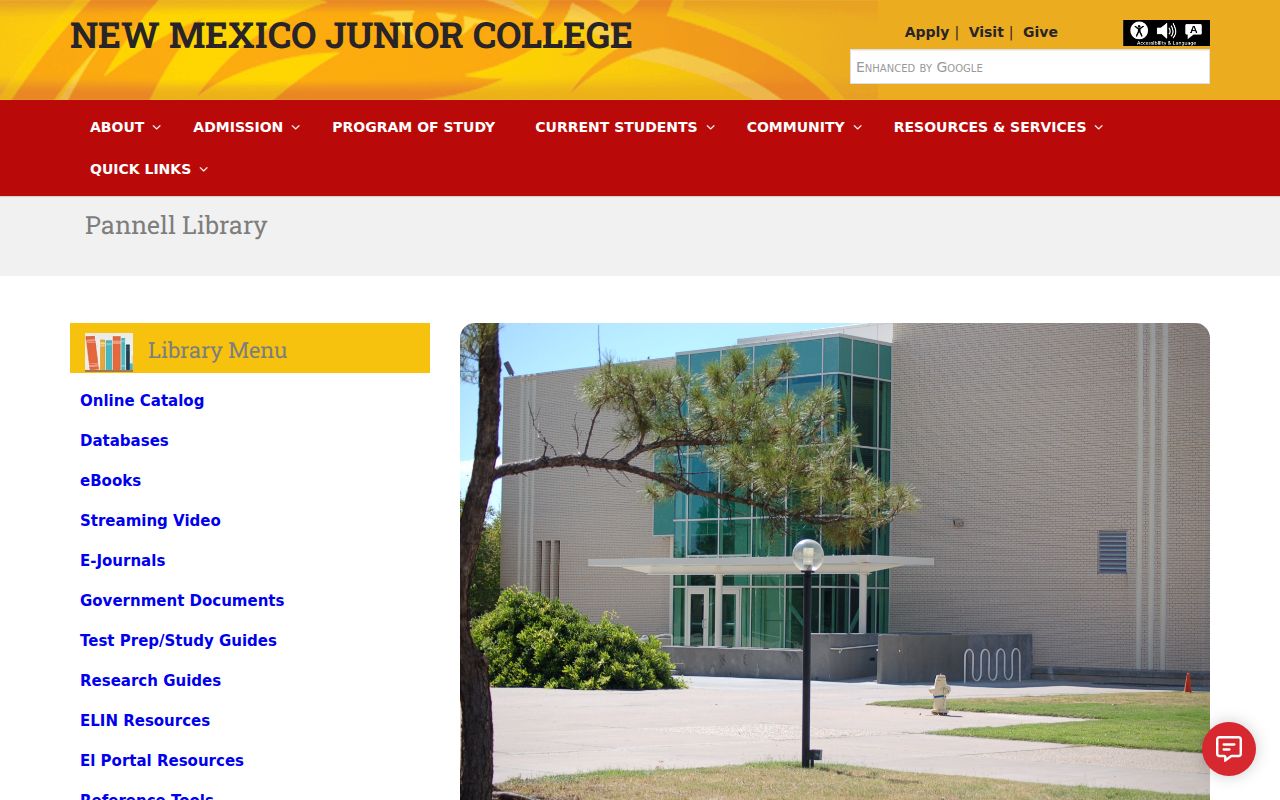
Hobbs Public Library maintains Local History, Southwest, Petroleum, newspaper, and microfilm resources, while New Mexico Junior College's Pannell Library provides public research computers and lets community guests request access at its circulation desk. Pannell Library is a useful local stop for catalogue and research-computer access when a home search reaches a holding or database that needs an in-person check. Neither library route turns a catalogue entry into proof of an address or identity. Both can help locate the next dated source.
The NMJC Pannell Library page describes its community research-computer and circulation-desk access.
For older context, the Library of Congress identifies the Hobbs Daily News as a 1936 newspaper title with a historic microfilm lead, and State Archives accepts citation-based remote requests or appointment research.
Hobbs Privacy Limits for Past Residents
Public property and directory leads do not erase privacy boundaries. The New Mexico Voter Portal is an individual's registration and polling-place tool, not an address or surname browse service. The Secretary of State's authorized voter-data process has separate conditions, and protected address or phone fields may apply. A voter record is not a safe way to declare that a person currently lives at a property. Keep historic research tied to a documented date and avoid republishing personal contact information from a parcel display.
The Secretary of State's July 2026 voter-data privacy update reinforces the need to use authorized channels and respect protected fields.
When a source is restricted, ask the appropriate custodian about the lawful process instead of seeking the same data through an informal route.
Hobbs Past Households and Records Use
Past residents research can support family history, estate and heir questions, or a careful house-history project. It works best when every name is paired with an address, source, and date. The Clerk's probate and marriage routes, the library's directories and newspapers, and State Archives genealogy aids may add context, but each has its own access limits. No specific Hobbs census schedule or census year was confirmed in the research, so treat State Archives' census and genealogy materials as an inquiry route and ask staff what is available for the exact period.
A historical address trail usually ends with a gap. That may reflect an unrecorded change, an unavailable issue, a restricted record, or a record held by a different custodian. Preserve the gap and the search terms used. A precise log makes the next request more useful and avoids attaching a living person to an address without adequate support.
Lawful use. Use Hobbs past-resident leads for family, estate, and house-history research, respect custodian limits, and never use them to stalk, harass, or harm anyone.
Note: A record's date is as important as its name, because a past listing cannot establish a living person's present location.