
Hobbs City Directory Holdings
Hobbs Public Library is the documented starting point for local directory work. Its ELIN catalogue confirms several distinct Hobbs listings rather than one uninterrupted, fully described run. The catalogue includes 1938-39, 1939-40, and 1941 city-directory records; a Hobbs, New Mexico Polk City Directory entry whose catalogue beginning is shown as 1939 onward; Polk records for 2013 through 2016; and a 2014 regional volume that includes Crossroads, Eunice, Hobbs, Jal, Lovington, Maljamar, Monument, and Tatum. These are strong leads for dated household and address research, but they are catalogue-level evidence. Confirm the actual issue, condition, scope, and local access before relying on a volume.
| Hobbs collection lead | Verified dates | Holding route | Access caution |
|---|---|---|---|
| Catalogued Hobbs city directories | 1938-39, 1939-40, 1941 | Hobbs Public Library ELIN catalogue | Ask staff to confirm the issue and use conditions. |
| Hobbs, New Mexico Polk City Directory | Catalogue beginning shown as 1939 onward | Local-history and reference call numbers, including LH/REF 352.058 | The listing does not confirm internal arrangement. |
| Polk directory entries | 2013-2016 | Hobbs Public Library catalogue | Use as a dated historical lead, then verify elsewhere. |
| Crossroads-area directory volume | 2014 | Hobbs Public Library catalogue | It is regional, so check its stated place coverage. |
The research did not locate an authoritative digitized Hobbs directory collection or a separately labelled reverse-directory collection. The catalogue search returns holding records, not directory scans. That distinction matters: a title found online tells you where to ask, not that the pages can be searched from home.
Hobbs Directory Shelves and Microfilm
Hobbs Public Library is at 509 N Shipp St and lists hours of Monday through Thursday, 9 a.m. to 7 p.m., and Friday and Saturday, 9 a.m. to 3 p.m. Its named Local History, Southwest, and Petroleum collections sit alongside newspapers, reference resources, public computers, interlibrary loan, and a microfilm reader/printer. Those resources are useful together. A directory can provide a name and dated address; a newspaper reel may provide contemporaneous context; and a local-history reference source can point to the next collection.
Before a visit, contact reference staff at reference@elinlib.org with the person or address, a date range, and the issue you hope to use. Ask for a shelf pull, whether the item is reference-only or circulating, the available microfilm span, any newspaper or obituary lookup policy, and reproduction charges. That request keeps the question narrow without assuming that every catalogue record has the same physical condition or access rule.
New Mexico Junior College's Pannell Library is a second local route. It provides public research computers, and community guests may request access at the circulation desk. Use it for catalogue and research-computer access when a local-history lead requires an in-person check.
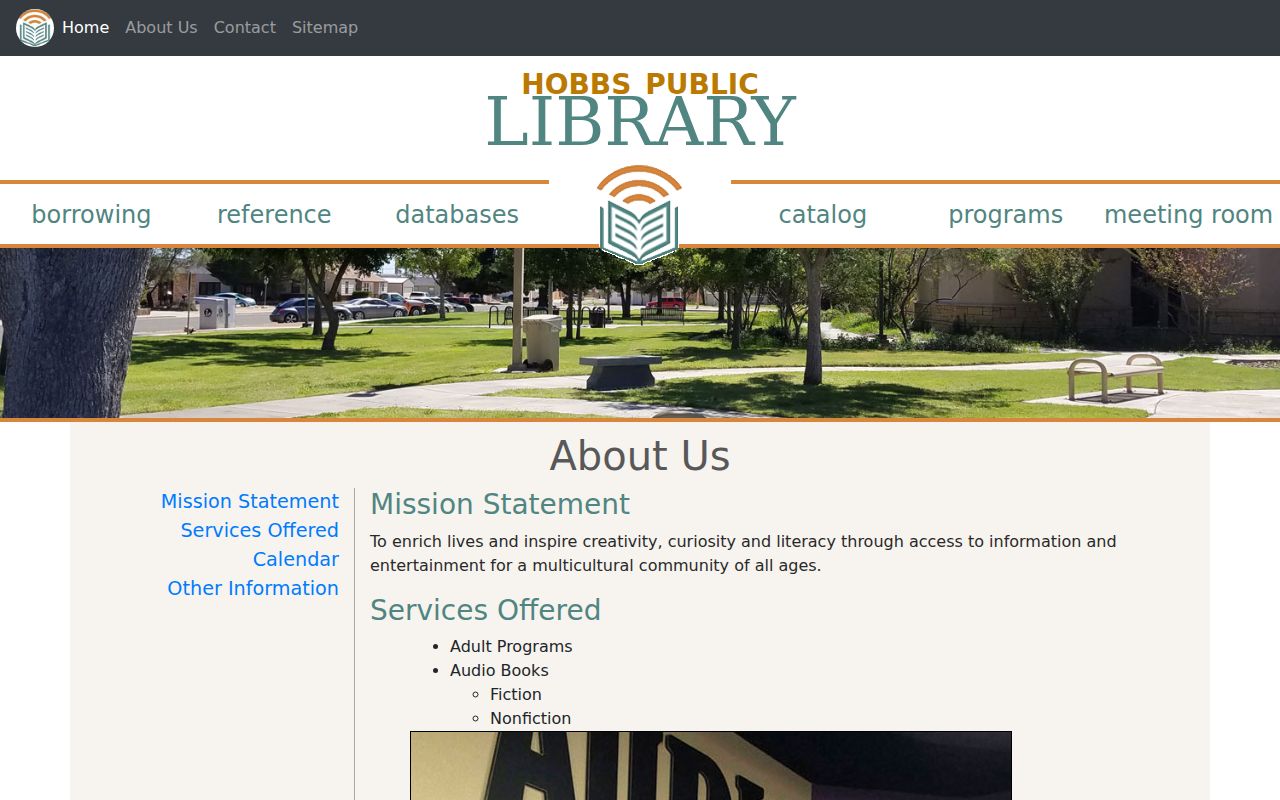
The library's published collection description identifies the local-history and microfilm route.
Use the reader and reference desk to verify a particular directory issue or newspaper date, rather than treating a catalogue result as proof of a complete run.
Note: Write down the catalogue title and call number before requesting a pull, because similarly named Hobbs volumes can cover different years or places.
Hobbs Archive Directory Requests
The New Mexico State Archives Heritage Search is the escalation route for government and historical material not kept locally. Its page links Archives Online and directs researchers to copy a catalogue citation into the Record Request Form, then email the request to archives@srca.nm.gov. In-person research is by appointment Tuesday through Thursday from 10 a.m. to 1 p.m. Remote inquiries are accepted Monday through Friday from 8 a.m. to 5 p.m.
State Archives maintains government records from 1621 onward and describes census, church, and history materials among its genealogy aids, subject to legal restrictions. For Hobbs and Lea County, use that channel chiefly for statewide or territorial context. Lea County was formed in 1917, so its older county-record series should not be treated as a Hobbs county source before the county existed. Give staff the exact catalogue citation, date range, and topic instead of asking for a broad city-directory search.
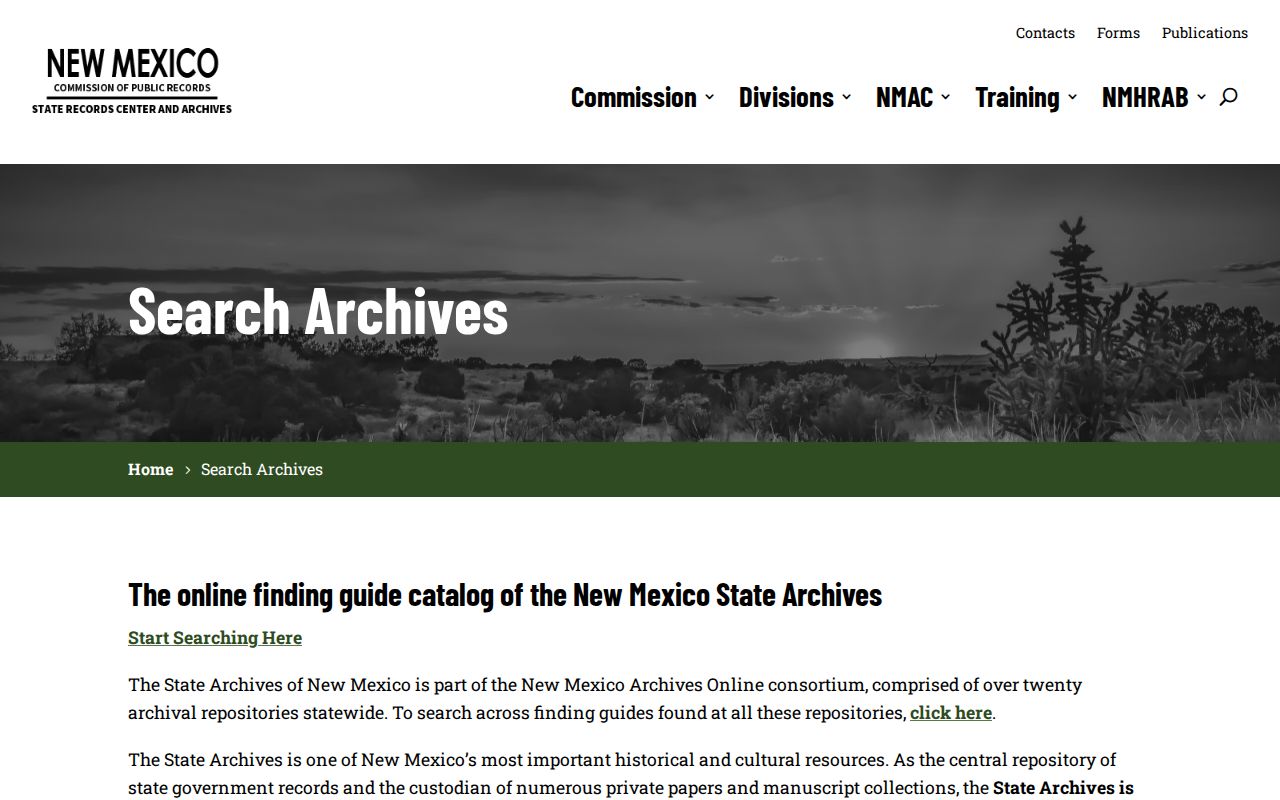
The State Archives request instructions show the catalogue-to-form path for remote research.
Archive staff can confirm whether a cited item is available for appointment research or can be handled through the remote request process.
Reading Hobbs City Directory Entries
A city directory entry should be read as a dated printed record, not as a current profile. The research confirms the Hobbs catalogue holdings and their household, address, and commercial-directory value, but it does not prove the internal arrangement of every issue. Photograph or transcribe the volume title page, publication year, and any publisher key before interpreting a line. Compare the spelling, street form, and listing type across issues. If an item does not display an expected field, leave that field unknown instead of filling it from a later record.
| Printed name | Record it exactly, including initials and spelling variants, then compare it with the next dated issue. |
|---|---|
| Address line | Use the address as a time-stamped lead and preserve the street form printed in that volume. |
| Commercial listing | A business or commercial-directory lead may connect the person or address to another contemporaneous entry. |
| Volume date | Keep the issue year with every note, since a listing is evidence only for that directory period. |
| Publisher key | Read any abbreviation key in the actual volume before assigning meaning to a mark or shorthand. |
- Criss-cross directory
- A street-order directory format that can place entries by address. No separately catalogued Hobbs reverse or criss-cross collection was confirmed, so ask HPL staff whether a specific volume has such a section.
- Householder entry
- A listing tied to a household or address. It is a dated directory lead, not proof that every person at the property was included.
- Abbreviation key
- A publisher's guide to shortened terms or symbols, when a volume includes one. It should be read from the same issue as the entry.
Hobbs City Directory Catalogue Limits
[MYTH] A successful catalogue search does not mean a Hobbs city directory is digitized, internally indexed, or complete. The ELIN catalogue supports several search approaches, including Keyword, Title, Start of Title, Series, Author, Subject, and Local Call Number, with a Local collection choice. It returns catalogue records. Use those records to identify likely titles and call numbers, then ask the library whether the exact issue is present, accessible, and useful for the address or surname at hand.
The same caution applies to address order. No authoritative separately labelled reverse or criss-cross collection was found in this research. A volume may contain a householder or street section, but that must be checked in the book. For a current parcel or street trail, shift to the county's address-based sources rather than stretching a historical directory beyond what its date and arrangement support.
Note: Treat each catalogue record as a holding lead until a librarian confirms the specific issue, format, and internal section needed for research.
Hobbs Directories, Newspapers, and Oil History
The directory shelf is one part of a larger Hobbs record trail. The Library of Congress record for the Hobbs Daily News identifies a 1936 establishment and a historic microfilm lead. The library's Petroleum Collection and the Library of Congress description of Main Street as an oil-boom setting in 1940 add context without converting a newspaper mention into proof of residence. Use the directory for a dated household or address lead, then use a newspaper or recorded instrument to test a separate question.
That mix is a practical local pattern. The Lea County Clerk records oil-and-gas leases along with deeds and other instruments, while the library preserves petroleum resources. A property or family question may therefore create several kinds of evidence: a directory issue, a parcel lead, a recorded document, and a newspaper reel. Keep each source's date and purpose in the research log instead of merging them into one unsupported story.
Hobbs City Directory Timeline
Known dates create useful checkpoints, not a promise of an unbroken publication run. The sequence below combines the catalogue and historical leads that were actually located.
- 1917: Lea County was formed, setting the beginning of its county record trail.
- 1936: The Library of Congress record identifies the Hobbs Daily News as established.
- 1938-1941: HPL catalogue records identify 1938-39, 1939-40, and 1941 city directories.
- 1939 onward: The catalogue beginning for the Hobbs Polk directory is shown as 1939 onward.
- 2013-2016: HPL catalogue records identify Polk directory entries for these years, with a related regional volume dated 2014.
Trace Families in Hobbs City Directories
To trace a household, begin with the earliest verified issue near the date in question and move one issue at a time. A change in spelling, address, or listing can be a lead for the next search, not a conclusion about a move, death, or relationship. The purpose is to build a date-aware sequence that can be checked against parcel, Clerk, newspaper, or archive records. When a property question turns into a current address question, the Hobbs by-street directory describes the county address-record route.
- Find the nearest confirmed Hobbs directory issue and preserve its title, date, and call number.
- Search the surname using initials and spelling variants, recording only what the printed entry supports.
- Compare the next available issue for an address change, a new household lead, or a changed commercial listing.
- Use the printed address or date to seek a parcel, recorded-instrument, newspaper, or archive lead through the appropriate custodian.
- Ask HPL staff about the pertinent newspaper microfilm or reference sources when a gap remains between available issues.
A name disappearing from a directory can reflect a move, an unlisted household, a publication gap, a spelling change, or another unknown reason. Mark it as a gap. The strongest next step is a nearby dated source, not a guess based on a later record.
Note: Keep the directory year beside every address because a current parcel display cannot establish the household that appeared in a historical printed volume.